
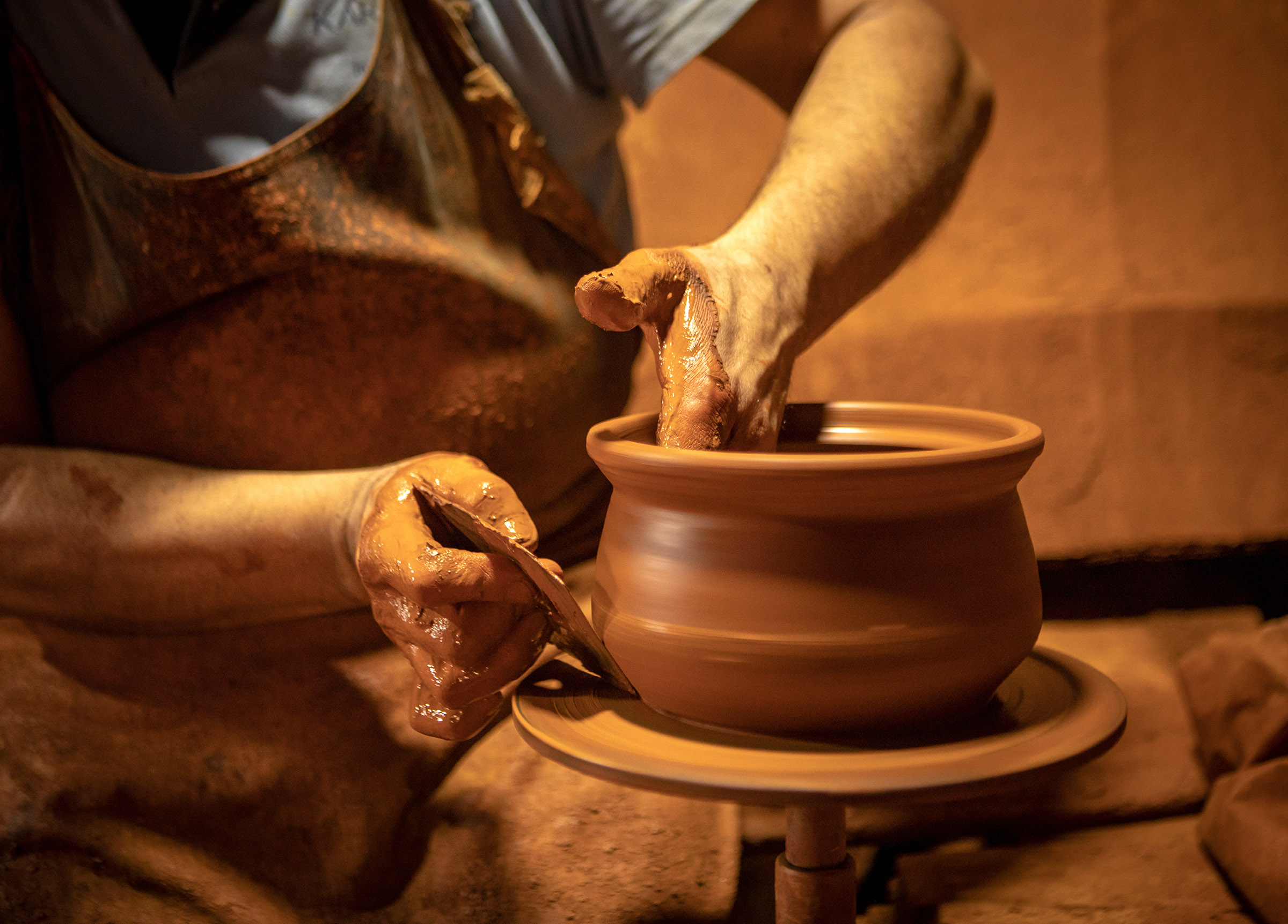
For centuries, Moroccan pottery has been more than just functional art. It tells the story of Morocco’s landscapes, traditions, and skilled artisans. Shaped from the natural clay of Fez and other regions, each piece carries the essence of heritage and culture. While modern ceramics are often mass-produced, Moroccan handmade ceramics remain unique, crafted with patience and passion. This timeless art form has been passed down from generation to generation, ensuring that the beauty of tradition lives on.
The journey of Moroccan clay pottery begins with raw earth. Clay is carefully gathered, cleaned, and prepared before it is shaped on the potter’s wheel. Every step requires precision, yet it also leaves space for creativity. After shaping, the pieces are dried and fired in traditional kilns. This process, although long, gives the pottery its strength and durability. As a result, the final product is not only practical but also an artistic expression of Moroccan identity.
Decorative elements play a vital role in distinguishing Moroccan artisanal ceramics from others around the world. Bright colors, detailed motifs, and geometric patterns bring life to each creation. Many designs are inspired by nature, Islamic art, and Berber traditions, making every plate, vase, or bowl a cultural treasure. Moreover, zellige-inspired details are sometimes incorporated, blending pottery with Morocco’s iconic mosaic art. These details do not simply decorate; they tell stories of the past, connecting today’s pieces with centuries of history.
In today’s homes, Moroccan pottery has found a special place. People value it not only for its beauty but also for its practicality. Bowls, mugs, and plates made by Moroccan artisans are durable enough for everyday use, while also adding charm to the dining table. Decorative vases and serving dishes bring a touch of Moroccan heritage into modern spaces. Therefore, whether used daily or displayed as art, each creation reflects a balance of function and culture.
What truly makes antique Moroccan pottery and modern creations remarkable is the human touch. Every artisan leaves a mark of individuality, something machines cannot replicate. The imperfections in handmade pottery are not flaws; instead, they are signs of authenticity and craftsmanship. For collectors, these qualities increase the value of each piece, making them timeless works of art.
As interest in sustainable and meaningful design grows, Berber pottery Morocco and other traditional crafts continue to inspire. Supporting Moroccan artisans means preserving a centuries-old tradition while bringing warmth and character into your home. In this way, owning Moroccan pottery is not just about decoration—it is about celebrating culture, history, and the artistry of human hands.