
The Origins of Moroccan Zellige Craftsmanship
Moroccan zellige tables are rooted in centuries-old traditions. Zellige mosaic art began in Morocco during the 10th century and has remained a symbol of refinement ever since. Passed down through generations, the craft continues to showcase patience, precision, and cultural pride.
How Moroccan Zellige Tables Are Made
From Clay to Colorful Tiles
The process of creating handmade Moroccan mosaic tables begins with clay, shaped and glazed into bright tiles. These tiles are then hand-cut with chisels into small geometric pieces.
Hand-Assembled Patterns
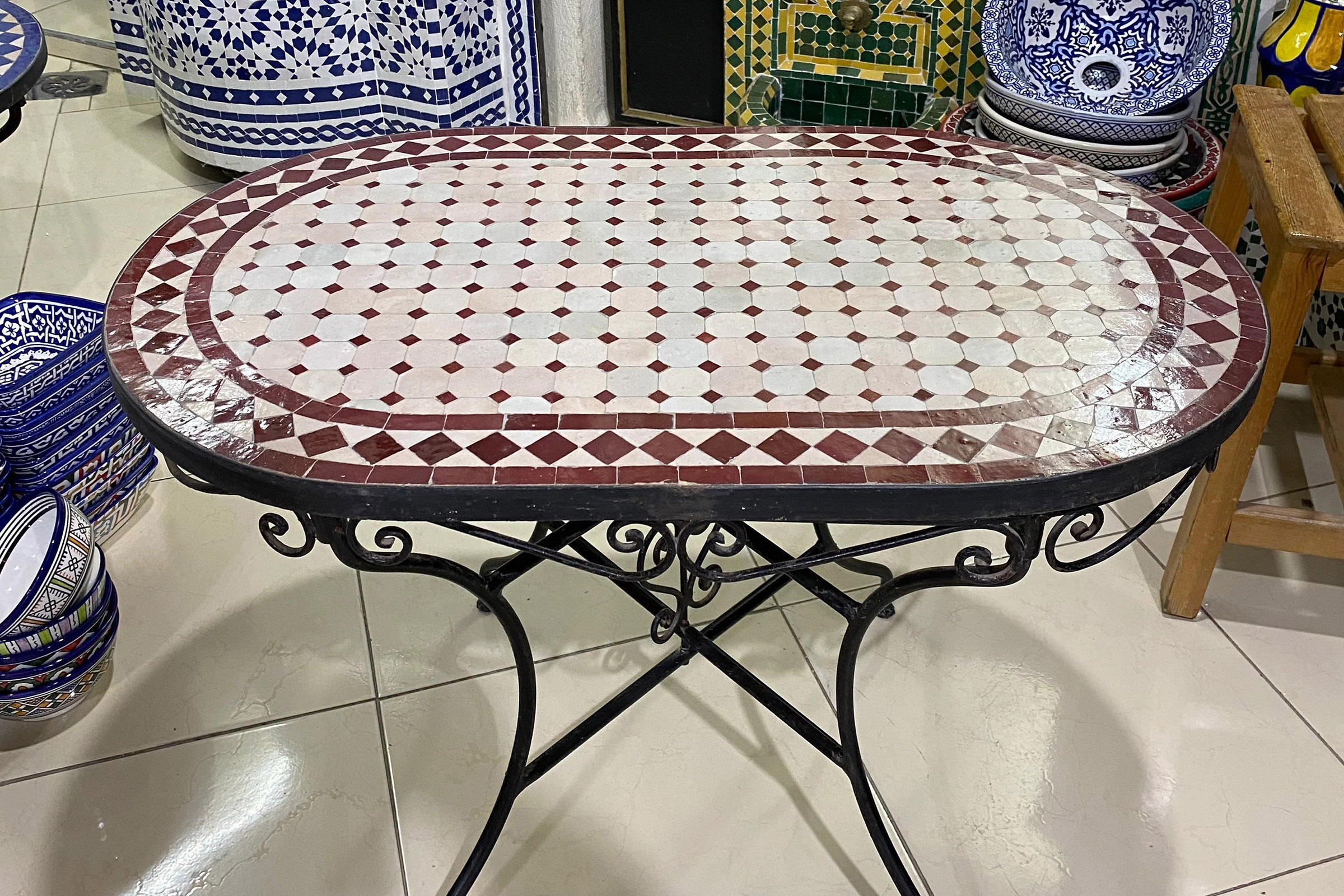
Each tile is carefully placed by hand, forming complex designs. As a result, every Moroccan zellige mosaic table is one of a kind, reflecting both artistry and dedication.
Symbolism and Design of Zellige Tables
Patterns on Moroccan mosaic tables often draw inspiration from Islamic art, nature, and geometry. Moreover, vibrant blues, earthy reds, fresh greens, and shining whites symbolize balance and unity. These colors and shapes make every table not only functional but also meaningful.
Durability and Practical Beauty
Beyond their cultural value, traditional Moroccan zellige tables are built to last. Strong bases of wrought iron or wood support the durable mosaics. Therefore, they can be enjoyed both indoors and outdoors, combining practicality with timeless style.
Moroccan Zellige in Modern Interiors
Today, zellige craftsmanship in Morocco inspires homes around the world. A colorful mosaic table adds character to minimalist spaces, while classic designs enrich rustic and bohemian styles. In addition, they bring Mediterranean charm to gardens and terraces.
The Human Touch in Artisanal Mosaic Furniture
What truly sets artisanal mosaic furniture apart is the human element. Hand-cut tiles and small imperfections are marks of authenticity. Consequently, each table tells the story of Moroccan artisans and their cultural heritage.
Conclusion: A Living Piece of Moroccan Heritage
Investing in Moroccan zellige tables means more than buying furniture. It supports artisans, preserves tradition, and brings unique artistry into everyday life. Whether used as dining tables, coffee tables, or decorative accents, they celebrate the timeless beauty of Morocco.