
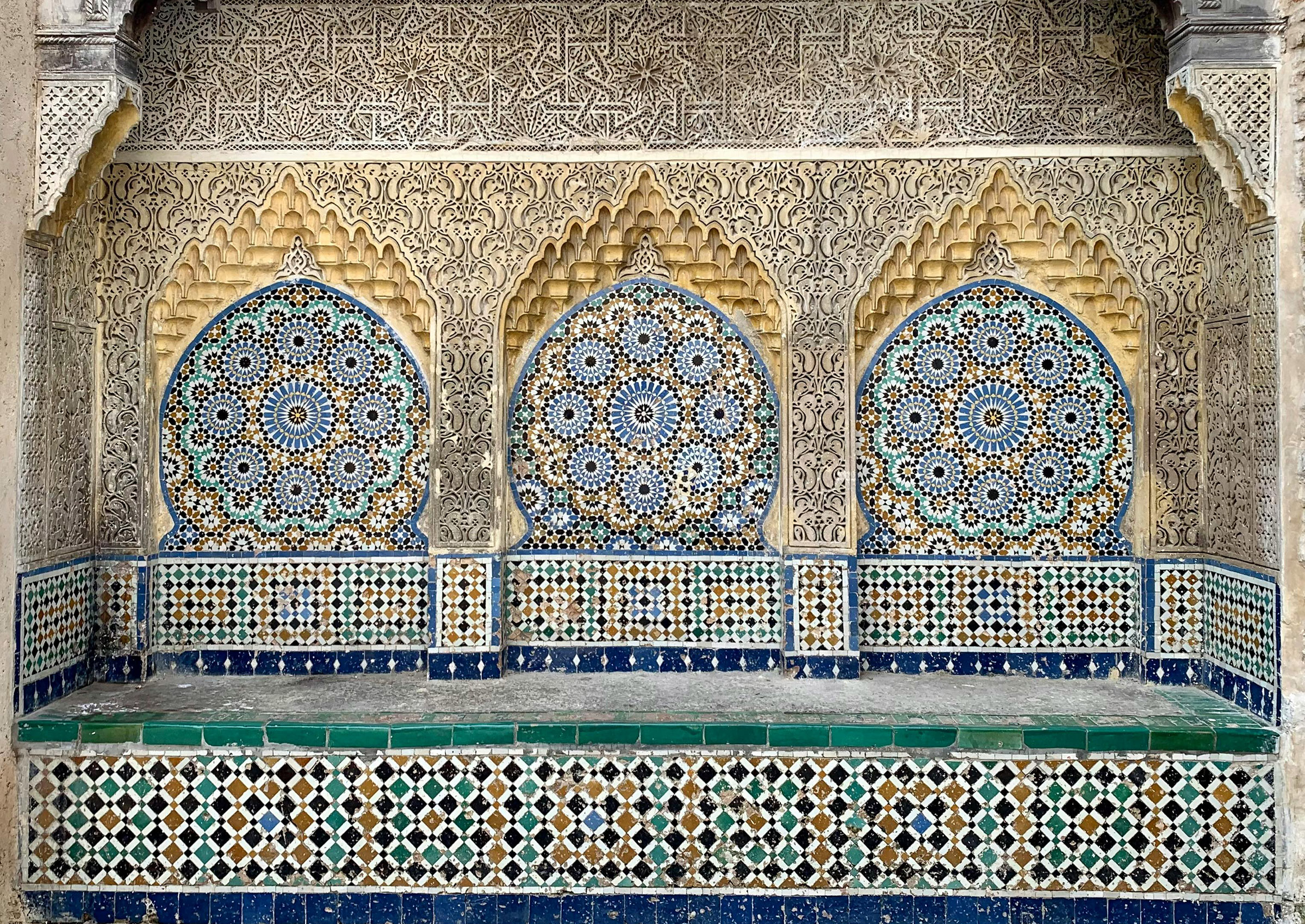
For centuries, Moroccan Zellige mosaics have fascinated the world with their intricate designs and cultural depth. These hand-cut tiles reflect Morocco’s architectural heritage, blending geometric harmony with vibrant colors. Far from being simple decoration, zellige tiles represent artistry, tradition, and precision.
The Origins of Moroccan Zellige Mosaics
Artisans in Morocco began crafting zellige tiles as early as the 10th century. Inspired by Islamic art, they designed mosaics without figurative imagery, focusing instead on patterns, geometry, and balance. From mosques in Fez to palaces in Marrakech, these mosaics became a hallmark of Moroccan mosaic art.
The Artisan’s Skill and Dedication
Creating traditional Moroccan zellige requires patience and mastery. Artisans shape clay by hand, fire it in kilns, and glaze the tiles in rich colors like cobalt blue, emerald green, and deep red. Then, they cut each tile into small geometric pieces with a hammer called a menqach. Afterward, they carefully assemble the fragments into intricate patterns, a process that demonstrates both skill and dedication.
How Zellige Transformed Architecture
Throughout history, builders and designers used Moroccan zellige tiles to cover walls, fountains, floors, and tables. These mosaics offered more than beauty—they symbolized harmony and balance in Moroccan culture. Today, homeowners and designers around the world choose Moroccan tile craftsmanship to bring timeless elegance into modern spaces.
The Global Appreciation of Moroccan Mosaic Art
In recent years, architects and interior designers have embraced Moroccan mosaic art beyond Morocco’s borders. From luxury hotels to private homes, zellige tables, walls, and floors showcase how ancient artistry can complement contemporary design. This worldwide admiration proves that Moroccan Zellige mosaics remain both relevant and desirable.
A Living Tradition Passed Down Generations
What makes zellige truly unique is the continuity of tradition. Families of artisans in Fez still teach the techniques of Moroccan handmade tile craftsmanship to younger generations. By preserving these skills, they ensure that Moroccan art continues to thrive and inspire.